
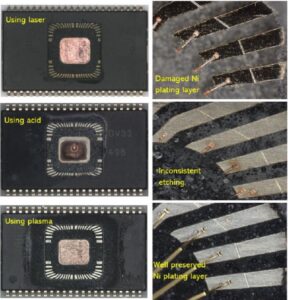
Revolutionizing IC Package Decapsulation with Microwave-Induced-Plasma (MIP) System
Preserving the electrical functionality of devices is critical for many failure analysis workflows. When wire damage or rebonding failures cause a breakdown of the electrical functionality of devices, the analysis is often halted. Two challenging sample preparation cases highlight how MIP decapsulation enables workflows that often fail with conventional acid or laser based techniques: Preserving
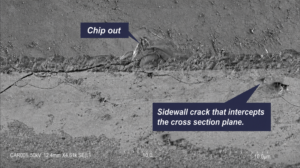
Methodology for Root Cause Analysis of 3D Multi-Chip Module Severely Damaged in Data Center Application
Why this paper matters At ECTC 2026, Charles Odegard from Texas Instruments will present the paper “Methodology for Root Cause Analysis of 3D Multi-Chip Module Severely Damaged in Data Center Application.” The paper focuses on the root cause analysis of a severely degraded customer-returned 3D multi-chip module used in a data center application. The
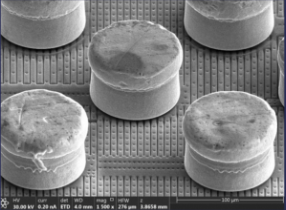
2.5D sample preparation with MIP decapsulation
MIP decapsulation is an effective sample preparation method for advanced 2.5D and 3D semiconductor packages, enabling precise underfill removal without damaging Cu microbumps or critical features. Unlike acid or conventional plasma methods, it avoids corrosion, preserves failure sites, and delivers significantly faster etching rates—supporting accurate and efficient failure analysis.

Be sure to catch JIACO Instruments presenting & exhibiting in May
During May, you will have the opportunity to learn from JIACO Instruments at several leading conferences and exhibitions we will be attending. Be sure to note the following presentation dates during these conferences to discover our latest applications and solutions: RadNext Workshop – held in Rome, ItalyOn May 6th, our colleague Yashan Peng-Shan Peng will
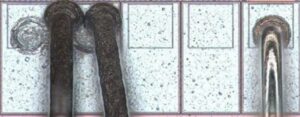
Detecting subtle wire bond defects with MIP decapsulation
Undetected wire bond defects can lead to intermittent faults or premature device failure, even when samples pass electrical curve trace analysis. JIACO Instruments’ MIP decapsulation offers a faster way to uncover these subtle issues, as minor bonding defects become visible through simple optical inspection. In a recent case study, an electrically failing PCC sample revealed oxidised, rough-surfaced defective bonds after MIP processing—providing clear visual evidence that traditional decapsulation methods can miss.
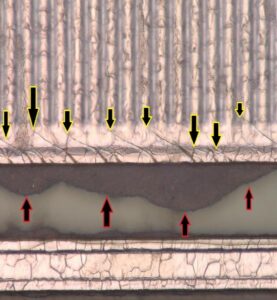
Manuscript featuring MIP selected as an Editor’s Choice article for2025 from the Journal of Failure Analysis and Prevention.
Congratulations to Mr. Sorrells, Mr. Nielsen, Mr. Walters of Microchip Technology and Dr. Tang, and Mr. McKinnon of JIACO Instruments, who have received confirmation that their manuscript “Optimizations and Case Studies: Decapsulation of Hardened Epoxy SiC MOSFETs and Diodes via JIACO Microwave-Induced Plasma Etching” was selected as an Editor’s Choice article for 2025 from the